moving load backcalculation app [bakML]

dynamic backcalculation application uniquely developed for the analysis of Traffic Speed Deflection Device (TSDD) data

measurement systems and moving-load backcalculation

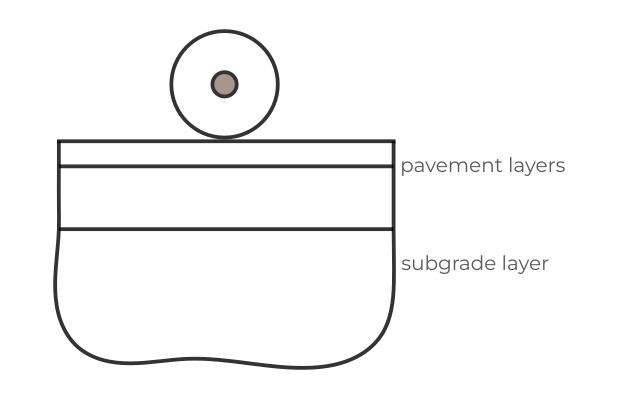
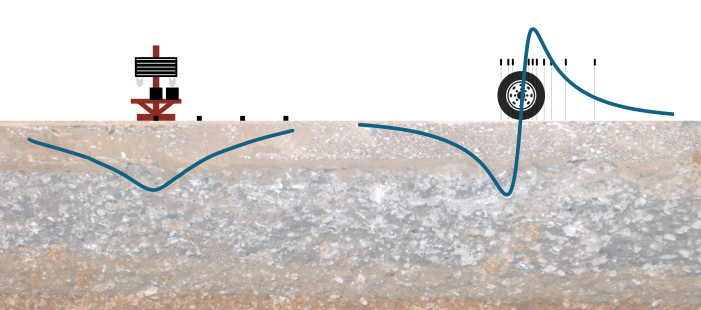
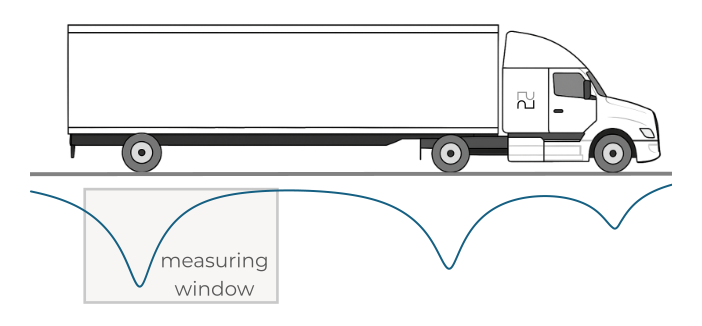
A Traffic Speed Deflection Device (TSDD) consists of a vehicle equipped with a measurement system that continuously measures pavement response under rolling wheel loads at highway speeds, eliminating the need for traffic control. These measurement systems, deployed on either combination trucks or single-unit trucks, generally fall into two categories: (1) systems that use Doppler lasers to measure pavement deflection velocities, and (2) systems that use laser distance measurements and triangulation to calculate deflections.

Data from TSDDs are typically used to calculate deflection basin indices—historically used with FWD data—or to estimate design parameters such as the effective structural number (SNeff). In contrast, bakML produces reliable layer moduli through moving-load backcalculation for use in mechanistic–empirical pavement design procedures and computes mechanistic, network-level metrics for estimating remaining life associated with surface cracking and unbound layer deformation.

Notably, bakML produces layer moduli comparable to those obtained from reliable FWD backcalculation, despite the fundamental differences in their loading and measurement principles—impulse loading for the FWD versus moving loading for TSDDs.
moving load modeling through Fourier transform

linear elastic and linear viscoelastic models

efficient and reliable backcalculation of pavement layer moduli

modeling techniques

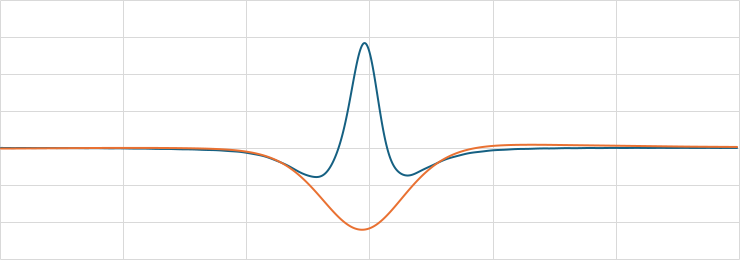
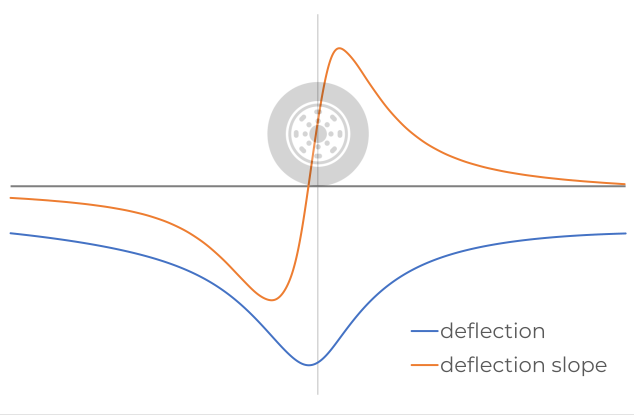
The effects of moving TSDD loads and diverse pavement material types are addressed using the Fourier transform method. This approach provides an efficient solution comparable to traditional finite element methods, while requiring only a fraction of the computational time.

layer properties

Pavement layers can be modeled in bakML as linear elastic, and temperature- and frequency-dependent linear viscoelastic materials. Hysteretic damping is considered for the linear elastic layers.

TSDD parameters

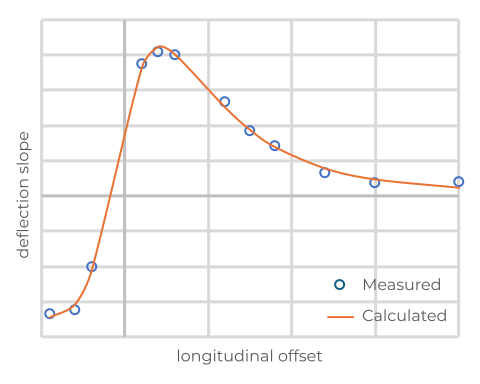
bakML can use TSDDs deflection slopes or deflections to determine the pavement layer properties through a robust optimization procedure.

distinct or common variables

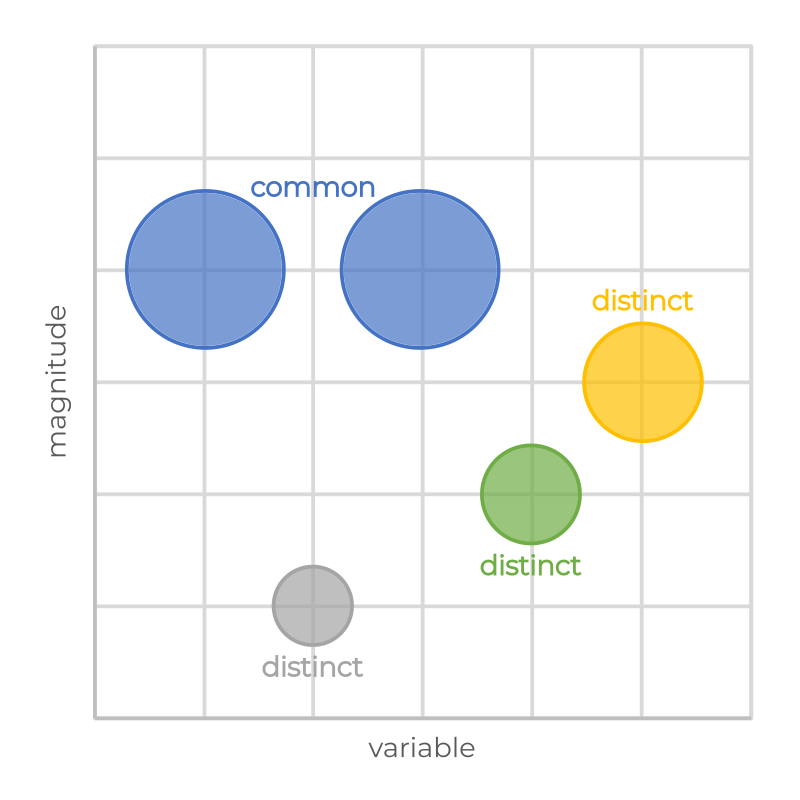
Backcalculation can be executed for a single or multiple TSDD test points. Any layer property can be set as a distinct variable. A variable can also be shared for the same property between different layers of the same test point; this shared variable is referred to as a common variable.

weight factors

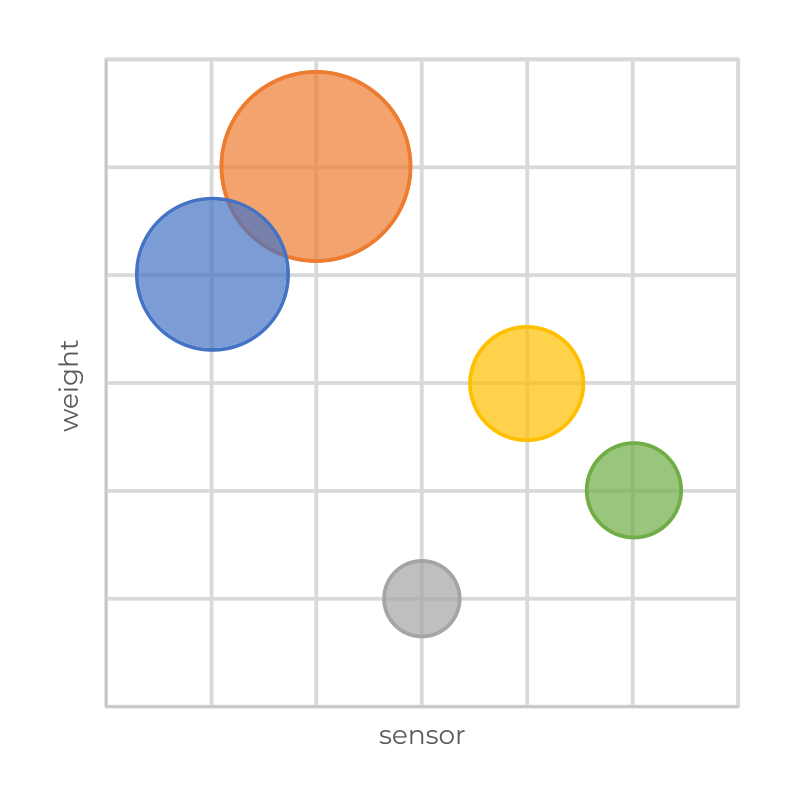
Objective function weights are introduced into the optimization process to reflect the relative importance of different responses. This involves assigning higher or lower weights to certain sensors, making them more or less influential in determining the optimal solution.

case studies

Explore below our showcase section to witness compelling case studies that vividly demonstrate the robustness and effectiveness of our bakML application.

New Title

FWD and TSDD pavement structural evaluation

network- and project-level evaluation

identify outliers in TSDD data