case study summary
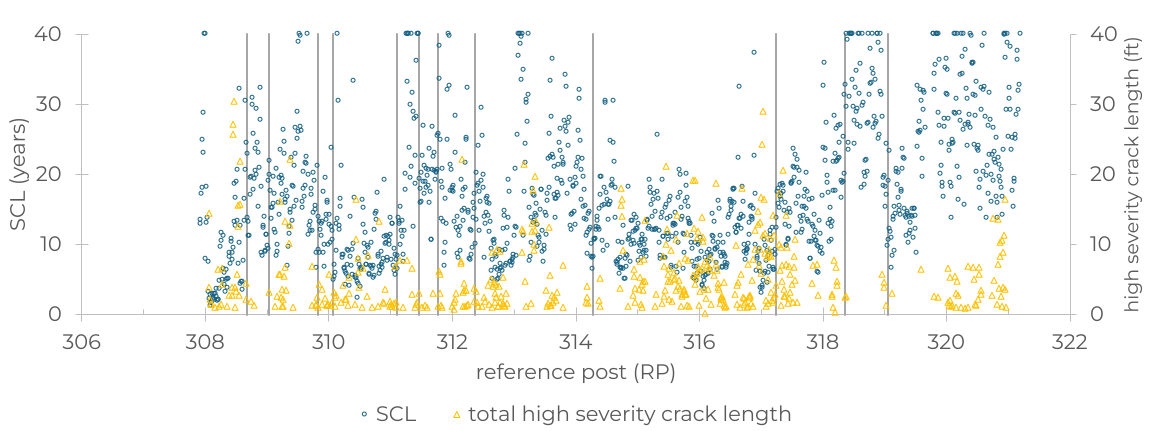
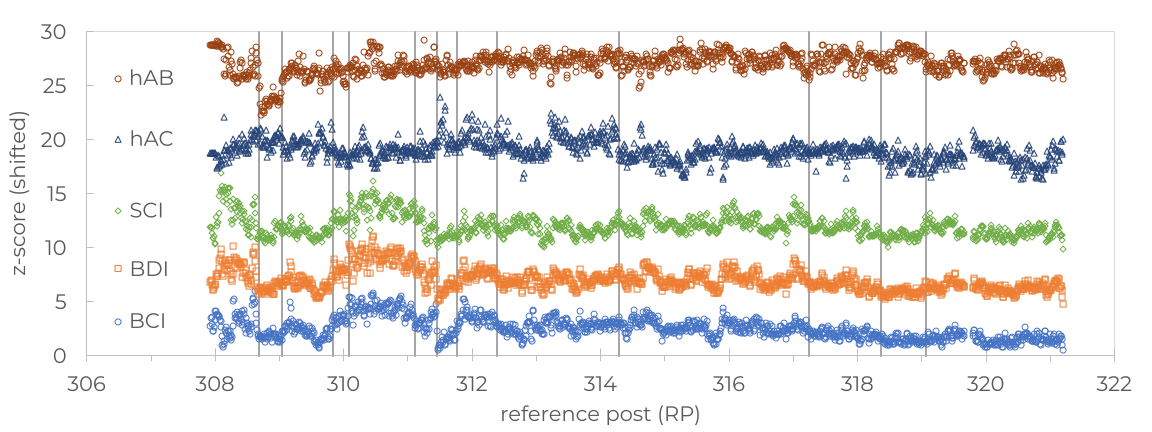
This case study analyzes data collected using a Traffic Speed Deflection Device (TSDD) equipped with Doppler lasers on a flexible pavement highway in the State of Montana. The highway section is divided into uniform segments using the change point detection method. Moving-load backcalculation is then performed for each segment using bakML to obtain the layer moduli. The collected FWD data were unreliable; therefore, the layer moduli could not be verified through nonlinear dynamic backcalculation. Instead, a sensitivity analysis is performed using bakML by vertically shifting the measured slopes, and similar moduli are obtained on average for the different scenarios. Overlay design is then performed using the classical mechanistic–empirical (ME) method by considering the backcalculated layer moduli, seasonal variations, and actual truck traffic. The analysis results in a minimum required overlay thickness of 2 inches. This type of structural evaluation can be implemented at both the network and project levels by adjusting the number of segments and the level of detail in the analysis. Furthermore, network-level performance metrics are presented, including Surface Cracking Life (SCL) and Pavement Deformation Life (PDL), which estimate the remaining service life (in years) for surface cracking and deformation of the unbound layers, respectively.
case study insights
The highway section included in this study is part of US Route 2 (US-2), a two-lane road located west of Chester, Montana. It extends from reference post (RP) 308.0 to RP 321.4, covering a length of 13.4 miles. The lanes are 11.8 ft wide, and have shoulders on both sides with variable widths along the highway.
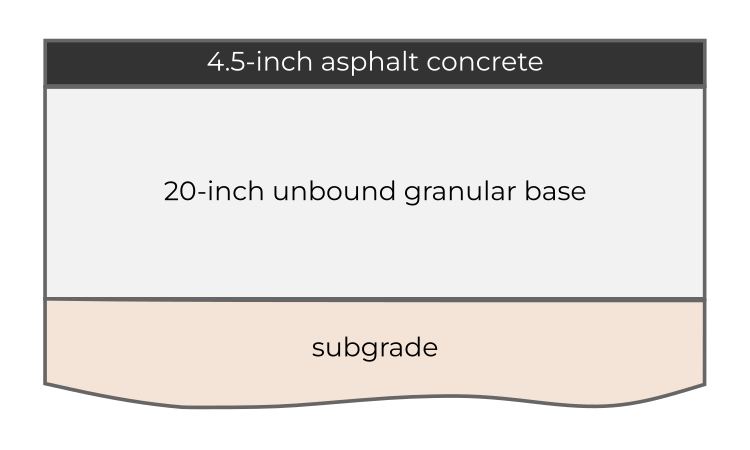
The pavement structure is composed of a three-layer flexible system consisting of an asphalt concrete layer and an aggregate base layer over a subgrade layer. Ground Penetrating Radar (GPR) testing was performed in the eastbound direction on August 21, 2023 using two antennas, having frequencies of 2 GHz for the air-coupled antenna and 400 MHz for the ground-coupled antenna. The thicknesses are shown to be variable, which is typical for a highway construction, with an average of 4.5-inch for the asphalt concrete layer and 20-inch for the aggregate base layer.
As part of the pooled fund study, TSDD testing is performed on August 10, 2024, in the afternoon using ARRB’s iPAVe system, which uses the Greenwood Traffic Speed Deflectometer (TSD). The data are reported at 0.01-mile (52.8 ft) intervals.
bakML sensitivity analysis
FWD testing was performed on August 22, 2023, in the morning using a truck-mounted deflectometer at 100 m intervals in the eastbound direction. Initial analysis of the load and deflection time histories indicated that the FWD data is unreliable; therefore, the data cannot be used to verify the results from bakML using nonlinear dynamic backcalculation of FWD data. Montana Department of Transportation (MDT) has since acquired a reliable FWD, along with a 3D GPR system, for the structural evaluation of the large network owned and maintained by the agency.
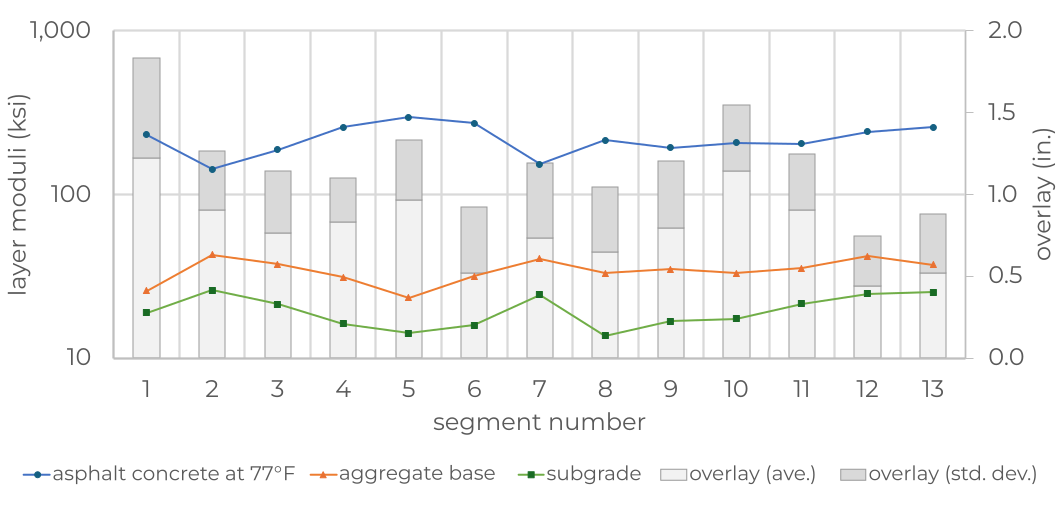
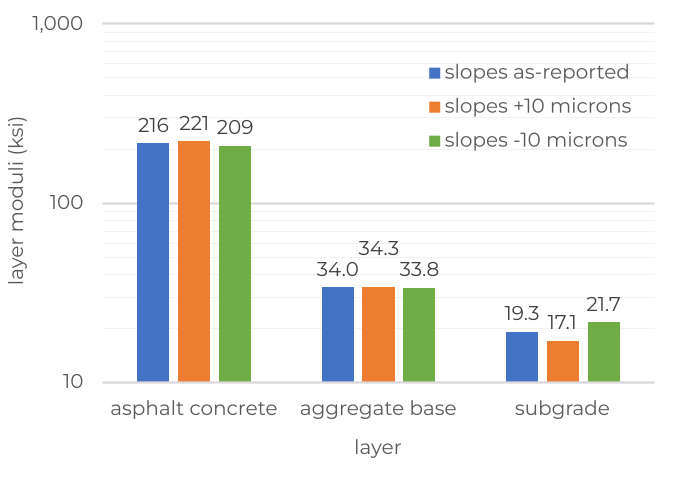
Due to the absence of reliable FWD data, a sensitivity analysis is performed using bakML by varying the TSDD-reported slopes by ±10 microns to quantify the effect of potential errors in the TSDD zero-slope assumption. The bar chart shows that the layer moduli for the three cases (control and ±10 microns) are comparable, with the largest difference being about 10% for the subgrade layer.
Regardless of this analysis, FWD testing using a reliable device and nonlinear dynamic backcalculation are required to verify the accuracy of the TSDD slopes and the resulting layer moduli.